
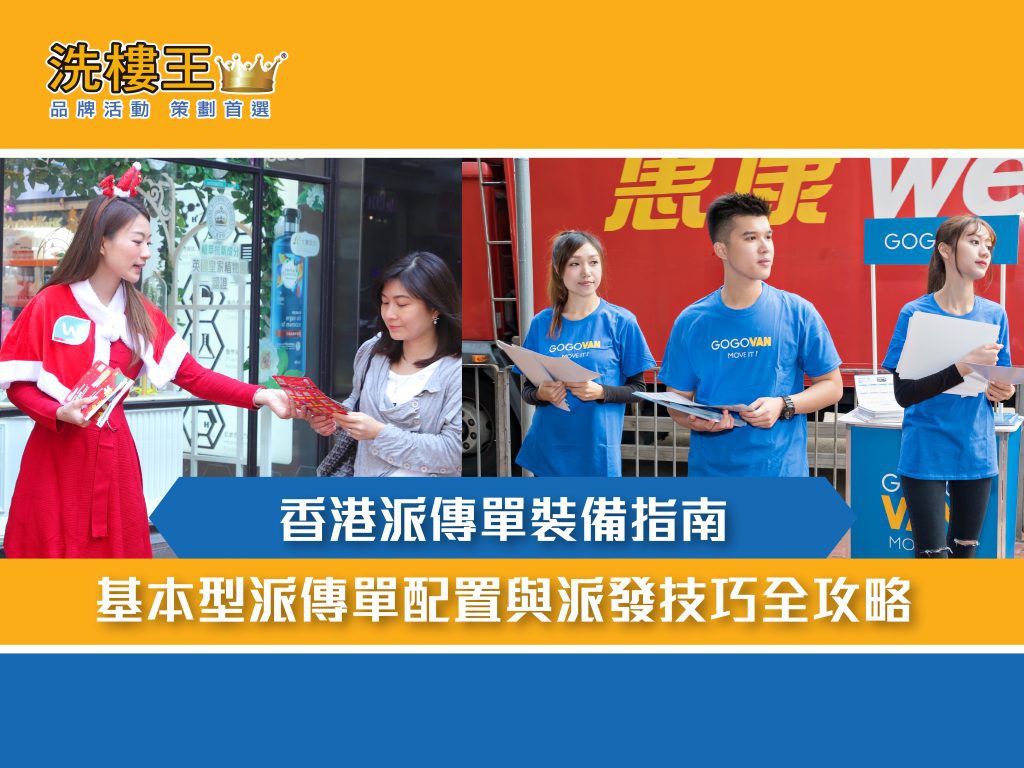
In Hong Kong’s highly competitive marketing environment, flyer distribution remains one of the most cost-effective and execution-efficient offline promotional channels. Whether for brand launches, festive campaigns, limited-time offers, or short-term promotional initiatives, well-planned equipment setup and clear execution strategy can significantly enhance on-street visibility and engagement—even for streamlined flyer distribution campaigns.
This article provides a structured overview of essential flyer distribution setups, while covering key operational elements including pre-campaign preparation, flyer distribution techniques, on-site interaction handling, and post-campaign performance tracking. It also addresses common search concerns such as flyer distribution agencies, recruitment considerations, regulatory compliance, flyer printing, flyer sizes, and flyer design—helping brands establish scalable, professional, and optimisable street marketing workflows.
This article also serves as extended content for Flyer King’s Street distribution & Street Marketing Services.
Why Flyer Distribution Remains Effective in Hong Kong?

As digital advertising competition intensifies and online acquisition costs continue to rise, flyer distribution retains several irreplaceable advantages:
- Direct, face-to-face exposure to target audiences
- Ideal for short-term promotions, openings, and limited offers
- Easy integration with QR codes for online registration and conversion
- Relatively controllable costs with measurable outcomes
With the right equipment setup and effective distribution tactics, flyer distribution remains a highly practical and results-driven street marketing approach in Hong Kong.
1. Pre-Campaign Preparation: The Foundation of Success
Successful flyer distribution begins with thorough pre-campaign planning. Brands should clearly define campaign objectives and audience profiles, then select distribution locations aligned with pedestrian flow characteristics—such as MTR exits, shopping mall entrances, core business districts, or residential areas.
Key preparation considerations include:
- Defining the purpose of flyer distribution (brand awareness, lead capture, offer redemption)
- Selecting optimal locations and time slots
- Planning manpower allocation and material replenishment
- Testing QR codes, registration pages, and redemption flows in advance
Well-executed preparation significantly improves on-site efficiency and downstream conversion performance.
2. Essential Flyer Distribution Equipment Overview
Even streamlined flyer distribution campaigns should be supported by appropriate equipment to ensure smooth operations and a professional on-street presence.
Core Equipment Setup
| Item | Purpose |
|---|---|
| Uniformed attire | Enhances brand recognition and professionalism |
| Staff identification badges | Builds trust and reduces public resistance |
| A5 flyers | Primary information delivery medium |
| Carry bags / trolleys | Efficient distribution and replenishment |
| imple display boards (optional) | Visual support for campaign messaging |
3. Uniforms & Identification: Establishing a Professional First Impression
In street-level engagement, first impressions significantly influence acceptance rates. Uniforms and visible staff identification help position promoters as official brand representatives, increasing credibility and willingness to engage.
Branded apparel featuring logos, campaign slogans, or brand colours—paired with carry bags or trolleys—improves operational efficiency while reinforcing consistent brand presentation.
4. High-Quality Promotional Materials: Flyer Design, Size & Printing

Flyers are the core touchpoint of any distribution campaign. Regardless of manpower, poorly designed or low-quality flyers will limit campaign effectiveness.
Recommended Flyer Standards
| Aspect | Best Practice |
| Flyer size | A5 format for portability and ease of handling |
| Flyer design | Clear messaging, concise layout, strong CTA |
| Flyer printing | Thicker coated paper to enhance perceived value |
Flyer size, design, and printing quality directly affect acceptance rates and brand perception. Supplementing flyers with small giveaways (e.g. tissues, stickers, or candies) further increases engagement and memorability.
5. Flyer Distribution Tactics & On-Site Interaction
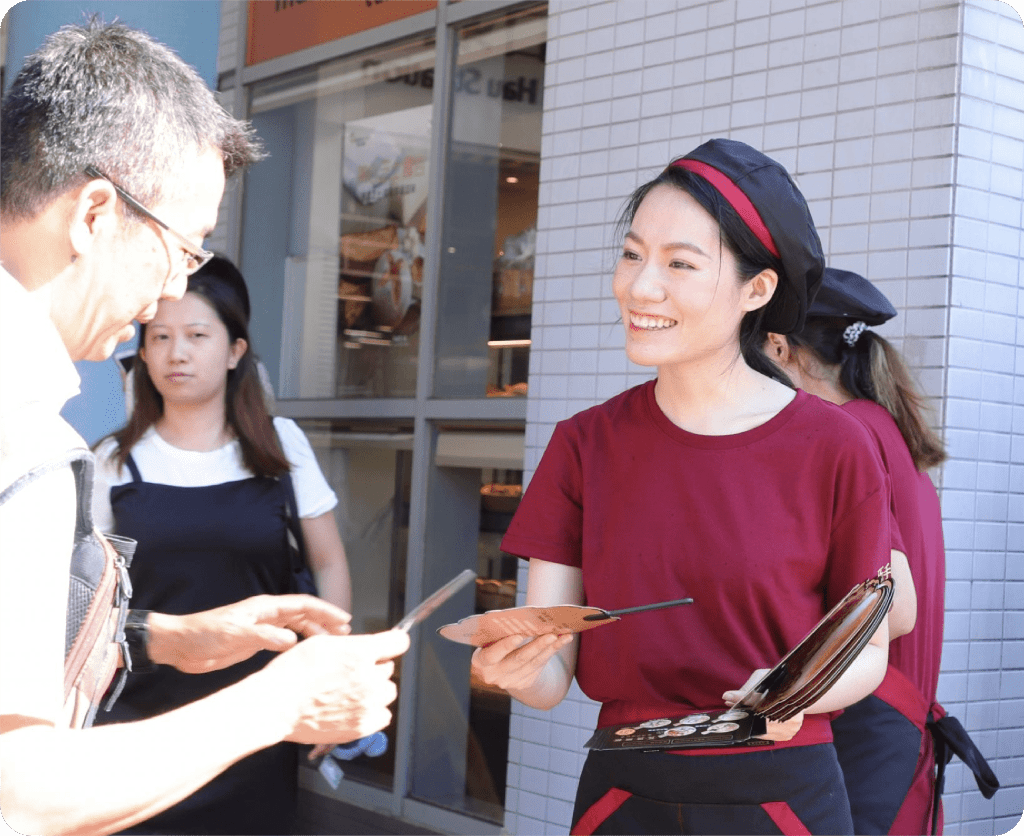
Effective flyer distribution goes beyond handing out materials—it requires refined interaction techniques. Promoters should be mindful of positioning, body language, and eye contact, using natural greetings to initiate engagement.
Practical distribution tactics include:
- Standing along pedestrian flow edges to avoid obstruction
- Maintaining friendly eye contact and a welcoming demeanour
- Using concise opening lines to capture attention
- Quickly identifying receptive audiences
Strong on-site interaction increases dwell time and message absorption.
6. Timing & On-Site Strategy Deployment
Distribution effectiveness is closely linked to timing and location. Lunch hours, post-work peak periods, and weekends typically deliver higher foot traffic and engagement rates.
Clear movement planning and appropriate manpower allocation further enhance operational efficiency.
7. Regulatory & Venue Compliance Considerations
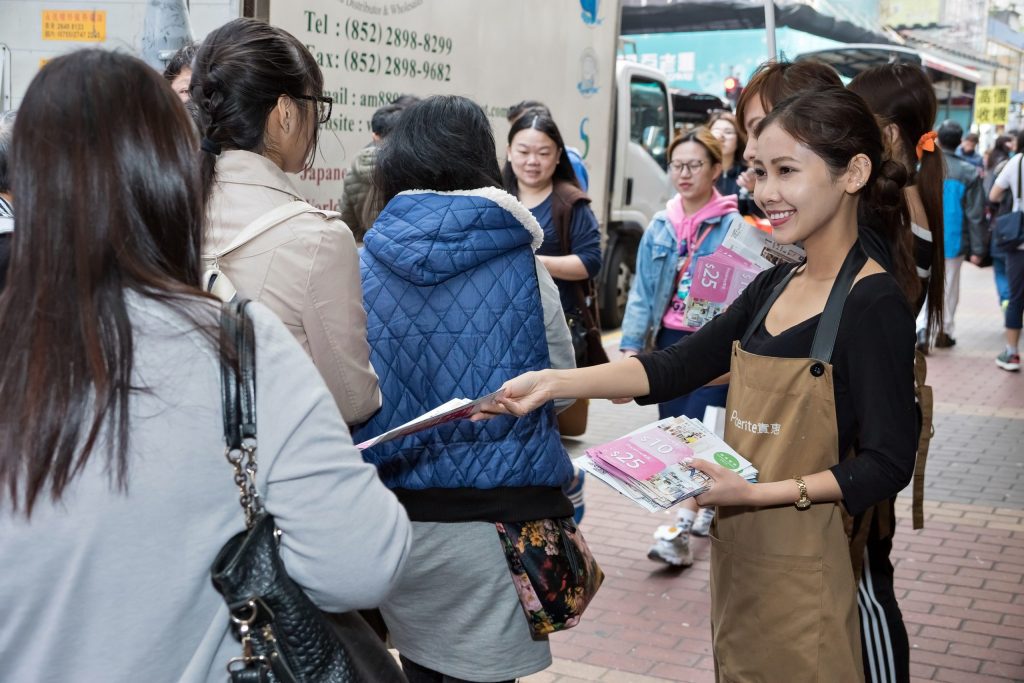
Flyer distribution in Hong Kong must comply with relevant regulations and venue policies. Distribution in public spaces should avoid obstruction or nuisance, while private venues (e.g. shopping malls) require prior approval from property management.
Compliance ensures uninterrupted execution and protects brand reputation.
8. Recruitment & Manpower Management
Brands often consider recruitment logistics when planning flyer distribution campaigns. In practice, manpower stability, basic training, and on-site supervision are critical—without them, distribution efficiency and brand image may suffer.
For brands lacking internal manpower management experience, engaging an experienced flyer distribution agency often provides greater operational reliability.
9. Post-Campaign Analysis & Performance Tracking
Professional flyer distribution campaigns include structured post-campaign analysis. Performance can be evaluated through:
- QR code scans and registrations
- Coupon redemption volume
- WhatsApp enquiry counts
- Time-slot and location performance comparisons
These insights enable continuous optimisation and distinguish strategic execution from ad-hoc distribution.
Conclusion: Strategic Setup × Tactical Execution = High-Performance Flyer Distribution
Successful flyer distribution is not driven by volume alone, but by the integration of equipment planning, execution strategy, interaction tactics, and performance follow-up. With structured workflows and disciplined execution, even streamlined setups can deliver tangible results within Hong Kong’s street marketing landscape.
Flyer King | Brand Activation & Street Marketing Specialists
Choosing the right flyer distribution partner in Hong Kong is not about manpower volume alone—it is about strategic planning, location analysis, and measurable outcomes.
With over a decade of experience in Hong Kong street marketing and flyer distribution, FlyerKing provides end-to-end solutions covering strategy planning, flyer design and printing, location selection, and on-site execution—ensuring smooth operations and quantifiable results.
Hong Kong Flyer Distribution & Street Marketing Solutions|Contact Flyer King ›