
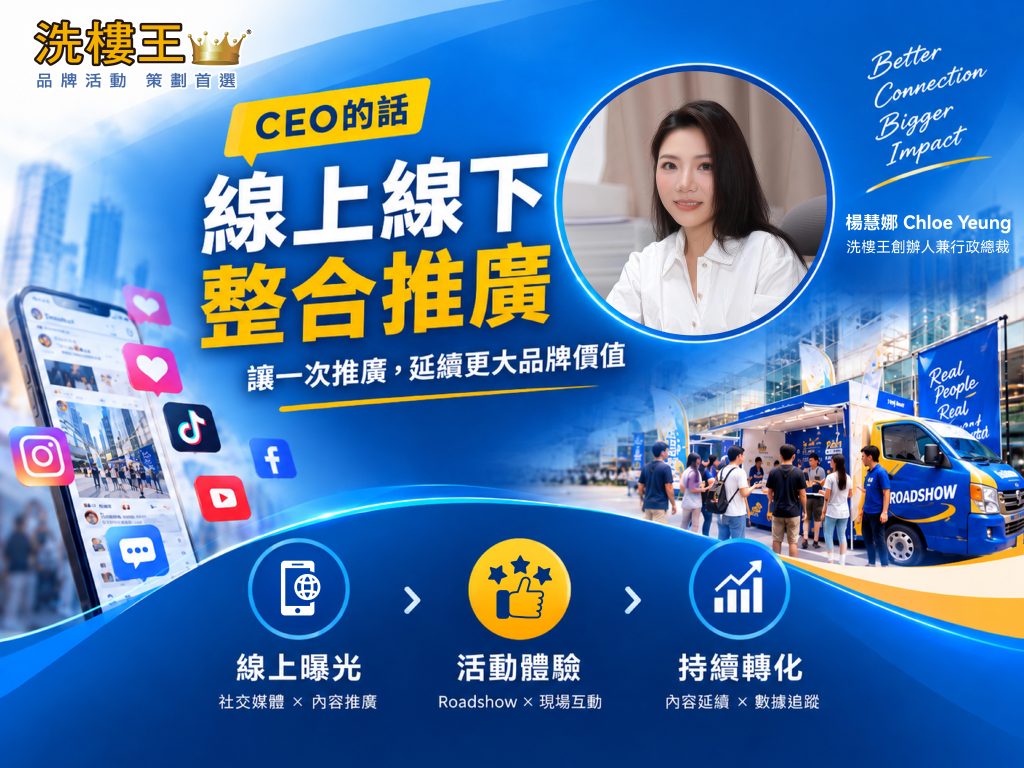
A Roadshow ends. The crowd was good, products were distributed, plenty of photos were taken… but what happens next?
Through the many brand campaigns we have executed over the years, we often see the same situation: the offline event is lively and well attended, yet the exposure ends the moment the event finishes. Social media campaigns run separately without driving audiences to the venue. Visitors engage on-site, but few are converted into members, followers, or potential customers. Even the valuable content and data collected during the event are often left unused.
In my view, that is a missed opportunity.
The true value of an event should never be measured solely by the number of visitors, samples distributed, or people queuing at the booth. What matters more is whether the brand can continue the conversation after that first interaction, turning a one-day event into multiple opportunities to engage with its audience.
I have always believed that online and offline marketing should not operate as two separate strategies. They should be planned together from the very beginning.
Before an event begins, brands can build anticipation through social media, KOL collaborations, digital advertising, and content marketing. The objective is not simply to increase awareness, but to generate genuine interest and encourage the right audience to participate in the offline event.
During the event, Roadshows, product demonstrations, interactive games, and promotional offers should do more than attract attention. They should create meaningful engagement. Through QR code registration, membership sign-ups, social media follows, promotional offers, user-generated content (UGC), or surveys, brands can transform a single face-to-face interaction into an ongoing relationship.
Most importantly, marketing should not stop when the event ends.
Photos, videos, customer interactions, and KOL content captured during the event can be repurposed into social media posts, highlight videos, advertising creatives, and remarketing campaigns to reconnect with audiences who have already shown interest. At the same time, registration data and customer insights collected on-site provide valuable information that helps brands understand which audiences responded best and how future campaigns can be further optimized.
This means an event is no longer just a “one-day campaign.”
Instead, it becomes a continuous marketing journey—from pre-event awareness, to on-site engagement, and finally to post-event content and data activation. An event that lasts only a few hours or days can continue generating brand value for weeks or even months.
Of course, not every brand needs to use every available marketing channel. What truly matters is identifying the campaign objective first, then selecting the right combination of online and offline touchpoints. If the goal is membership acquisition, registration should be seamlessly integrated into the event experience. If product experience is the priority, content creation and UGC may be more valuable than collecting contact information. If brand awareness is the objective, post-event content distribution and media amplification become equally important.
To me, integrated marketing is not about adding more channels. It is about ensuring that every stage leads naturally to the next.
A digital advertisement brings people to an event. An on-site interaction creates an opportunity for future engagement. One successful event generates content and data that continue creating value long after the event has ended. When every touchpoint is connected, every marketing investment works harder and delivers greater long-term impact.
Looking ahead, Flyer King will continue to develop integrated marketing strategies that connect online and offline resources, helping brands turn every campaign into more than just a single moment of exposure—but the beginning of a lasting relationship with their audience.
Chloe Yeung (楊慧娜)
Founder & Chief Executive Officer
Flyer King